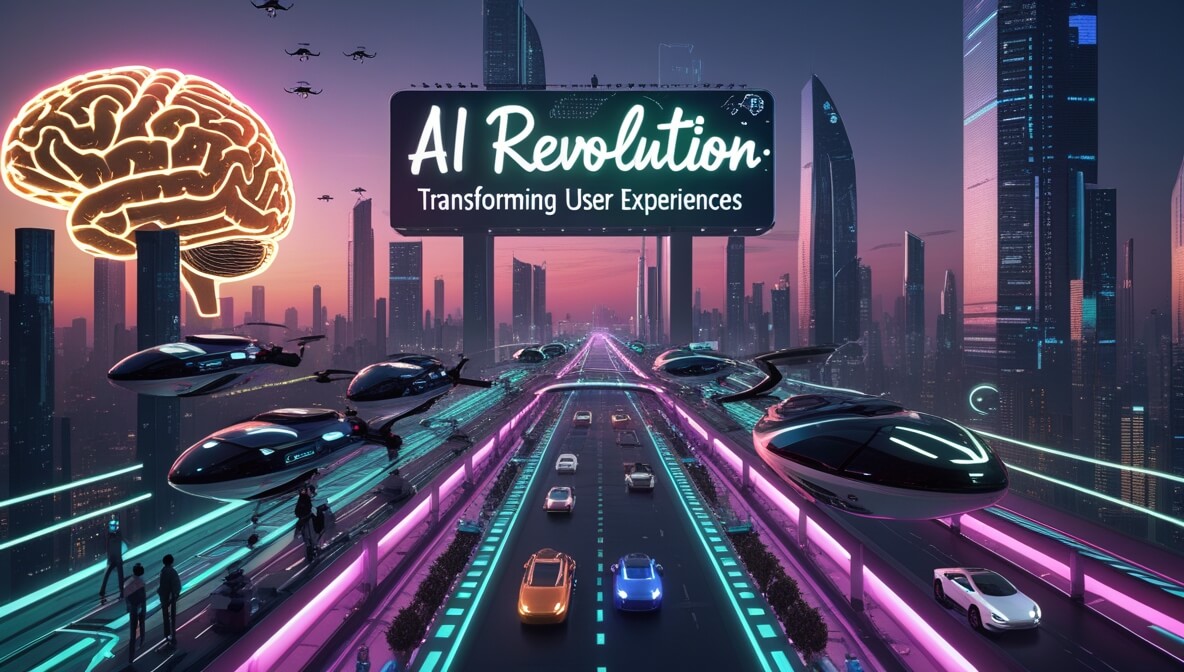
Artificial Intelligence (AI) is no longer a futuristic concept—it's a present-day reality that’s transforming industries and redefining how users interact with technology. From predictive analytics to real-time personalization, AI is reshaping expectations and driving innovation in user experience design.
The Power of AI in UX
AI has enabled interfaces to evolve from reactive to proactive. By analyzing user behavior and preferences, AI can anticipate needs, offer tailored suggestions, and automate complex tasks, all of which contribute to a more seamless and engaging experience.
- Personalization: AI tailors content, recommendations, and services to individual users.
- Natural Language Processing (NLP): Enhances communication between users and machines via chatbots, voice assistants, and sentiment analysis.
- Predictive Analytics: Helps forecast user needs based on behavior and patterns.
Real-World Applications
AI is embedded in a variety of applications across sectors, significantly improving how users engage with digital products:
- Streaming Platforms: Services like Netflix and Spotify use AI to recommend content based on previous consumption habits.
- E-Commerce: Online retailers employ AI for personalized product suggestions, dynamic pricing, and AI-powered customer support.
- Healthcare: AI supports telemedicine platforms with symptom checkers and diagnostic tools that improve accessibility and care.
- Finance: AI enhances fraud detection, automates investing strategies, and powers robo-advisors for consumers.
"Artificial Intelligence is not just automating tasks; it’s transforming how humans and machines collaborate to solve problems." — Mark Thomson
Ethical Considerations
As AI becomes more pervasive, it's critical to address the ethical challenges it brings, particularly in areas like data privacy, algorithmic bias, and user trust.
- Transparency: Users should understand when and how AI is being used.
- Bias Mitigation: Developers must ensure algorithms are trained on diverse, representative datasets to prevent unfair outcomes.
- Privacy: Responsible data collection and management practices are essential to maintaining user trust.
Challenges in Implementation
Despite its advantages, integrating AI into user experiences poses several challenges:
- Data Dependency: AI requires vast amounts of quality data, which isn’t always available.
- Computational Costs: Running AI models, especially in real time, demands significant processing power.
- Human Oversight: Designers and engineers must continually evaluate AI behavior to ensure relevance and reliability.
The Future of AI in UX
As AI technologies mature, we can expect interfaces to become even more intuitive. Emerging areas such as Emotion AI, which can interpret user moods, and Generative AI, which dynamically generates content or visuals, are set to further personalize and enhance digital interactions.
With responsible development and ethical use, AI holds the potential to deliver more empathetic, inclusive, and meaningful digital experiences that truly serve the user.
Curious how AI can enhance your product's user experience? Let’s collaborate and create intelligent solutions together.